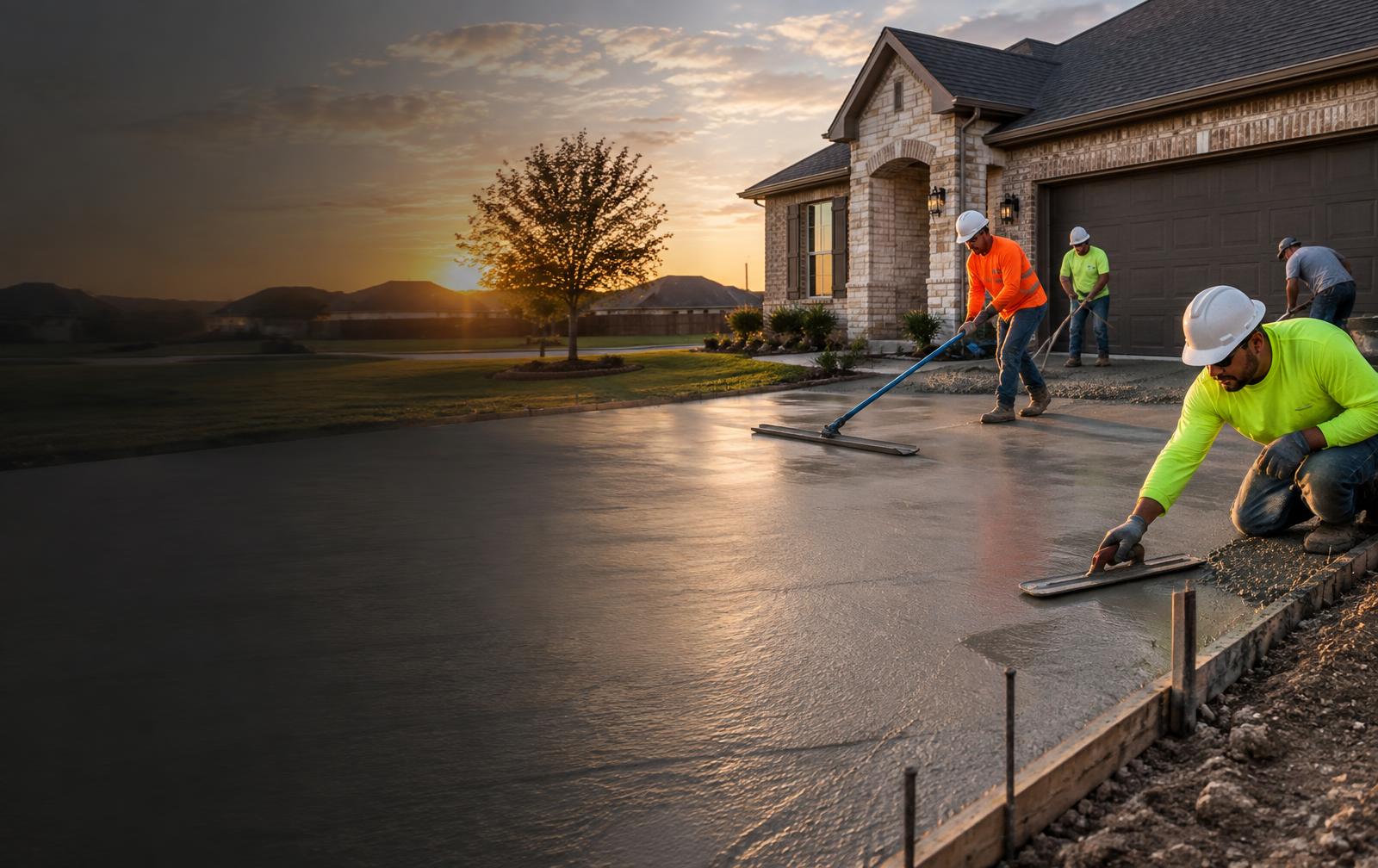
Built for the way you use it
Plan the surface before planning the pour.
Walkways and steps solve circulation and elevation changes in a compact footprint. Small surfaces still demand careful grading, comfortable proportions, durable edges, traction, and clean connections to existing pavement and entrances.
Preparation and performance
A walkway should follow a natural route while moving water in the right direction. We consider gate openings, downspouts, planting beds, utilities, existing slopes, and the approach to doors before setting forms.
A scope that fits the project
Steps require consistent rise and run dimensions for comfortable use. Landings, transitions, handrail planning, and nearby drainage may also influence the layout. The goal is a route that feels predictable underfoot and fits the surrounding property.
Finish and long-term expectations
Finish and edge choices can connect a walkway to a driveway or patio. A broom finish is practical for traction, while decorative borders can emphasize entries and garden paths when the added detail suits the site.
Why local site conditions matter
Concrete in Central Texas is exposed to intense sun, fast temperature changes, heavy downpours, and soil that can move as moisture conditions change. No contractor can make ground conditions disappear, but careful grading, base preparation, reinforcement planning, joint placement, and curing create a more thoughtful installation. We evaluate the visible conditions at your property and explain what belongs in the proposed scope.