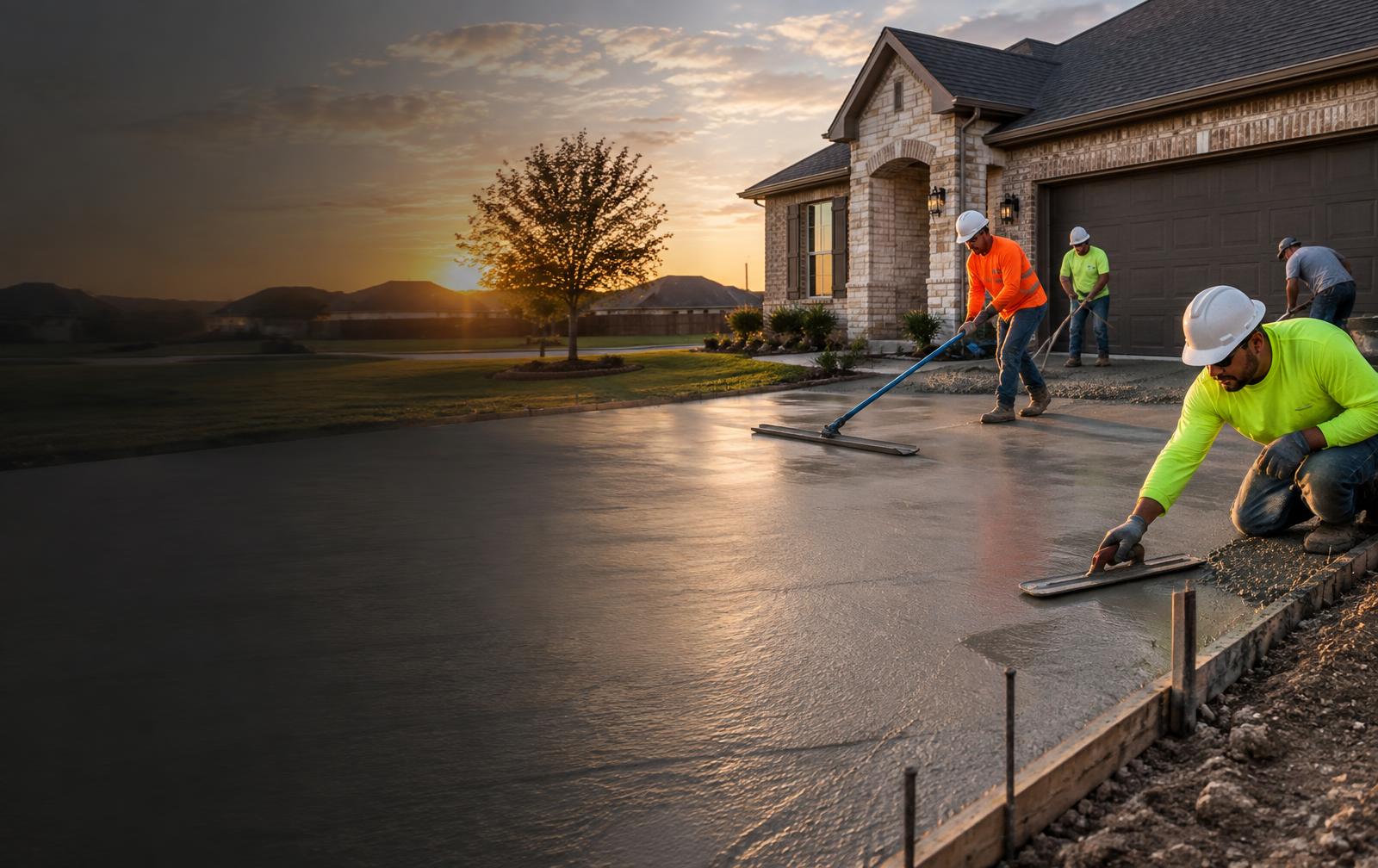
Built for the way you use it
Plan the surface before planning the pour.
Not every crack requires replacement, and not every damaged surface is a good candidate for a patch. We look at movement, settlement, drainage, edge failure, surface wear, and the intended use before recommending a practical path.
Preparation and performance
A cosmetic crack and a moving slab are different problems. Repair materials may improve appearance or seal an opening, but they cannot stabilize every underlying soil or base condition. An honest assessment helps avoid spending money on a treatment that cannot address the cause.
A scope that fits the project
Replacement is often the clearer option when panels have shifted, drainage has failed, edges are badly broken, or damage is widespread. Selective removal can work when the affected section is well defined and a new panel can meet sound concrete cleanly.
Finish and long-term expectations
Resurfacing may refresh an appropriate stable surface, while sealing can support certain decorative finishes. Suitability depends on the condition of the existing concrete. We explain what can reasonably be improved and where a new pour offers better long-term value.
Why local site conditions matter
Concrete in Central Texas is exposed to intense sun, fast temperature changes, heavy downpours, and soil that can move as moisture conditions change. No contractor can make ground conditions disappear, but careful grading, base preparation, reinforcement planning, joint placement, and curing create a more thoughtful installation. We evaluate the visible conditions at your property and explain what belongs in the proposed scope.